Drag to pan · use + / − to zoom · arrow keys to move · Home to reset · select a numbered place. Ctrl + wheel also zooms.
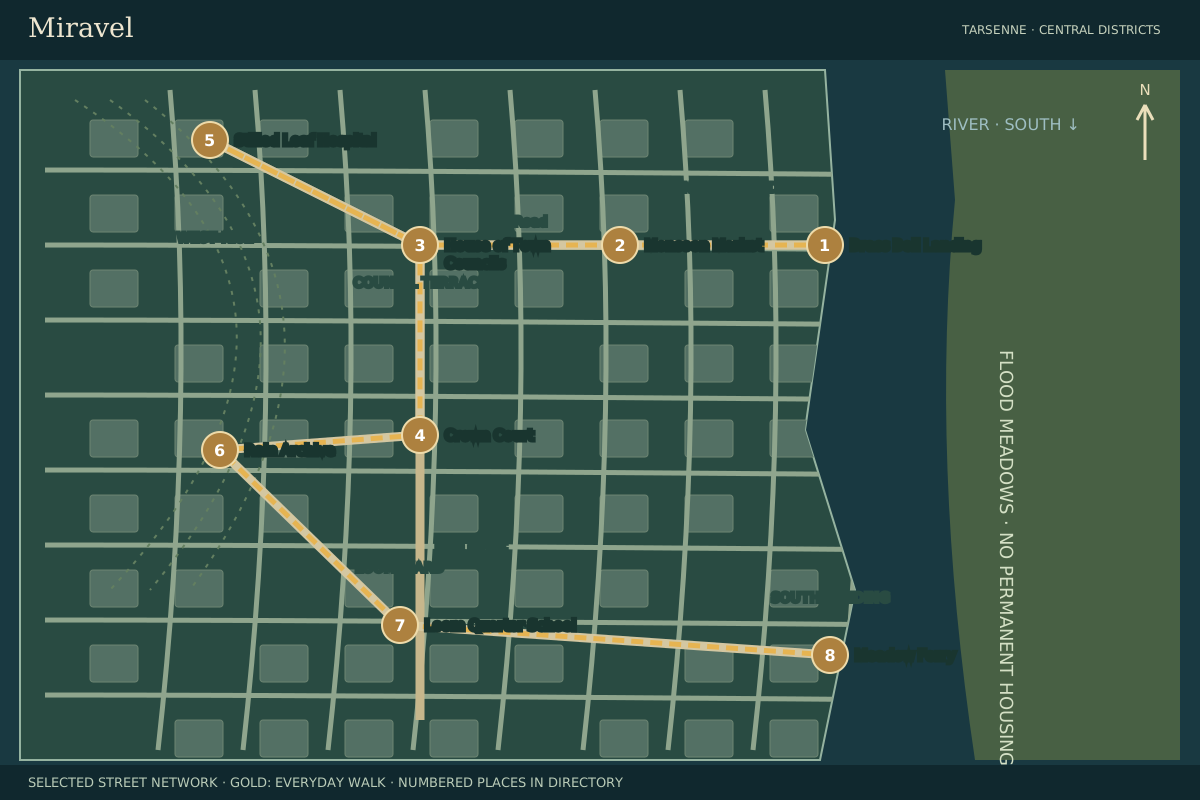
Select a numbered place to read its purpose. The written directory below contains the same information.
Miravel · central streets
Zoom, pan, search named places and follow links between maps.
The river beside the city
Miravel occupies the Ildren’s western bank. The river runs from north to south; higher residential ground lies farther west. Across the water, eastern meadows absorb floods and support seasonal grazing, reed cutting and temporary events. The plan places no permanent capital district on those meadows and no imaginary bridge across them.
Town returns for SR 683 give a rounded built-up population of about 180,000 and a wider district population near 290,000. Both describe residents, with the urban figure included in the district and the district included in Orsala’s national estimate. Market visitors, boats’ crews and temporary fair attendance make a different count.
Landing Ward occupies the busy lower western terrace. Council Terrace contains civic offices and established houses. West Rise has cooler rooms, hospitals and valuable gardens, but also inconvenient rentals reached by stairs. Loom Ward, to the southwest, combines workshops, schools and shared courtyards. Flood exposure and social standing overlap without becoming identical.
Eight places on the plan
The landmarks all stand west of the Ildren. Two are river landings; the meadow ferry crosses only when the current service notice permits. The city plan is relational rather than a cadastral survey.
| No. | Place | District | Why people go |
|---|---|---|---|
| 1 | Brass Bell Landing | Landing Ward | Parcel boats, passenger arrivals and river notices |
| 2 | Monsoon Market | Landing Ward | Food, household supplies and covered trading |
| 3 | House of Town Councils | Council Terrace | Municipal business and chamber sessions |
| 4 | Crown Court | Council Terrace | Royal administration and announced public audiences |
| 5 | Stilled Leaf Hospital | West Rise | District referral care and clinical teaching |
| 6 | Rain Archive | West Rise | Court copies, district records and historical research |
| 7 | Loom Quarter School | Loom Ward | Teaching, evening classes and courtyard performances |
| 8 | Meadow Ferry | South Landing | Permitted crossings to the seasonal eastern meadows |
Bell Road and Rain Street
Bell Road climbs west from Brass Bell Landing through Monsoon Market to the House of Town Councils. Beyond the council house it bends northwest towards Stilled Leaf Hospital. Rain Street runs north to south along the middle terrace, passing the council house and Crown Court. It stays on the western side of the river throughout.
A practical walking circuit begins at the landing, follows Bell Road through the market to the councils, and continues northwest to the hospital. Returning to the council house, the walker turns south down Rain Street towards Crown Court. A rising westward lane leads to the Rain Archive. From there, a descending lane heads southeast to Loom Quarter School, and the marked lower street continues east to Meadow Ferry.
The numbered circuit is 1–2–3–5–3–4–6–7–8. Every walking segment remains west of the river. The final crossing is optional and governed by the ferry notice, with a return service checked before departure. Hospital buses use the graded upper road; several attractive pedestrian shortcuts contain steps.
Water, waste and the cost of access
Drinking water is drawn upstream, treated and lifted to covered tanks on western high ground. Distribution needs pumps as well as gravity. Waste collection and treatment sites lie downstream of occupied riverfronts, with working access maintained along the southern service road. Storm drains and flood gates are inspected before the expected monsoon; an inspection mark records a visit, not a guarantee against every possible rise.

Lower businesses use raised storage and removable floor fittings. Rental rules require disclosure of recorded flooding, although tenants complain that describing water as exceptional can become an annual tradition. The eastern meadows are managed as a floodable landscape; closing the ferry is not evidence that somebody has forgotten to improve the city.
Miravel’s reserve granaries and freight stores lie along southern service approaches. Their food shipments and Hadrin’s technical textiles pass towards Namar’s coastal brokers. The city’s riverboats distribute goods and clinical supplies; they provide no automatic route from Tarsenne to another star.
Shaded rest places, public toilets and dependable buses matter as much as monumental approaches. The journey a court visitor can manage with a suitcase is not necessarily one a patient can manage after treatment.
The blue cloth
Retired dyer Osvena Marr took her granddaughter to the school courtyard with a folded cushion and a warning about the final song. The performers always asked the audience to join in. Her granddaughter promised to protect her, then sang the opening verse before anyone else had found the tune.
On the small stage, a queen wore a blue cloak Osvena recognised as one of her old workshop’s rejected lengths. The darker patch beside its fastening had once cost her half a morning’s argument. Under the lamps it looked like the shadow of a cloud.
Her granddaughter leaned close. ‘Did you make that?’ Osvena considered explaining the dye fault. Instead, she nodded. The child sat back, delighted, and pointed to the cloak when her friend arrived. Osvena let the final song reach her before deciding whether to join.
A western-bank capital
Miravel's growth followed the Ildren's usable western terraces and the Talun Crown's need for stores, hearings and transport. The River Oath of SR 252 did not give the capital a free hand over every estate along the river. Landed jurisdictions and later town powers accumulated around it. The city became the place where those claims met, often carried by people paying for rooms while their own fields needed work.
The Scarcity Years left records of requisitions and delayed compensation in the Rain Archive. After the Town Compact of SR 601, council delegations acquired stronger bargaining tools and continued to require food, washing and somewhere to sleep. The resulting service economy survives in court lodgings, copy shops and meal rooms near Rain Street. Constitutional disagreement has supported a considerable number of small businesses.
Who owns a dry room
Landing Ward tenants compare river access with the cost of repeated wet floors. West Rise offers higher ground but includes subdivided buildings reached by steep approaches. A household member recovering from treatment may be unable to return to the cheapest room. The city records flood history for rental disclosure; describing last year's water as unprecedented becomes harder when the same phrase appears on three successive agreements.
Cloth sorter Merenna Vol keeps copies of her leases in a covered tin at her sister's house. The arrangement is ordinary mutual protection, not evidence that either expects a conspiracy. Her family combines paid sorting, washing and irregular parcel work. A week of closed lower access reduces several earnings at once. Town care funds may help, but proving the loss takes time during which rent continues to become due.
From Bell Road to Namar
Brass Bell Landing handles parcel boats and passengers; the southern service approaches support bulk stores and reserve granaries. Bell Road's market traffic has different needs from a sealed medical consignment. Carriers record handling and temperature where required, and a clean package does not become properly refrigerated because somebody has written urgent on it.
Hadrin fibres and Tolset products pass through the city's transport and clinical networks towards Namar, alongside domestic orders. Municipal clinics and food reserves have their own prior claims under the kingdom's rules. Packing suppliers, pump mechanics, washing contractors and waste crews support these chains. The final buyer rarely knows their names, although a failure in any one service can make the buyer's expensive goods worthless.
| Place | Practical use | Household preparation |
|---|---|---|
| Brass Bell Landing | Parcels, arrivals and river notices | Allow for a changed service and protect documents from wet |
| House of Town Councils | Municipal decisions and chamber business | Bring copies and arrange care during waits |
| Stilled Leaf Hospital | Referral care and clinical teaching | Plan the graded journey after treatment |
| Rain Archive | Historical and court records | Identify the claim and relevant district before ordering copies |
| Meadow Ferry | Permitted seasonal crossing | Check closure notices and the return service |
Flood ground is already occupied by life
The eastern meadows receive floodwater and support grazing, reeds and seasonal activity. River guards manage access without treating every person there as an unlawful settler or every dry interval as permission to build. Bronze-throated rails nest among the reeds; mud shears hunt along inundated edges. When the ferry closes, passengers must wait or establish another usable route before setting out.
On the western bank, veil-mould threatens stored cloth, bedding and cramped rooms during humid spells. Workshop drying spaces compete with rentable floor area. A landlord can make a shed profitable by partitioning it while leaving each new household without a place to dry its clothes. Hospital outreach staff connect repeated breathing complaints with damp housing; the remedy requires construction and enforcement alongside treatment.
The sound measure and the unhelpful crest
The Hydraulic College trains observers to compare upstream gauges with the river's later behaviour at Miravel. Failed predictions remain useful evidence when their limitations are recorded. Apprentices learn to inspect pump wear and sediment damage rather than relying on a polished control panel. Rain Street offices receive reports of faulty flood gates, including those protecting property with influential owners.
Royal administration, town engineers and river guards negotiate responsibilities before emergencies expose every ambiguity. Guard crews practise moving patients and keeping approaches open, while the army's duties remain distinct. Clinical teaching at Stilled Leaf includes contamination control and consent when spellcraft assists a particular procedure. Psionic observation cannot replace material evidence of an unsafe structure, and an engineer's refusal to certify one does not become disloyalty because a crest hangs above its door.
A colour kept through the rain
Loom Ward evening classes combine literacy, accounts and practical work with performances in the school courtyard. Apprentices learn how much clean water dyeing needs and why some attractive finishes damage skin or cloth. Retired workers bring knowledge as well as stories; they are not obliged to perform gratitude for being invited. Osvena Marr's recognition of a rejected blue length on stage belongs to a city where skilled work often appears in an unexpected second life.
Rice cakes and pulse fritters sell beside sour fruit drinks at Monsoon Market. Seed-keeping congregations share supplies according to their obligations; Still-House readers offer quieter gatherings. Span players seek dry courts while pole-course crews wait for safe reaches. A family picnic on a permitted western terrace can include disagreement about the flood levy, affection, a badly packed meal and the determination to remain a little longer before the walk home.