Tavren Reach · streets and landmarks
Zoom, pan, search named places and follow links between maps.
The harbour and its inhabited ground
Tavren Reach occupies a sheltered reach of Fallow Sound on Pelaset. Engineered quays and transfer yards line the working waterfront, with civic premises and dense low housing on higher ground behind them. The municipal estimate is roughly 640,000 residents, already included in the charter province's 8.4 million. Its economic reach extends into surrounding districts without automatically making their residents municipal taxpayers.
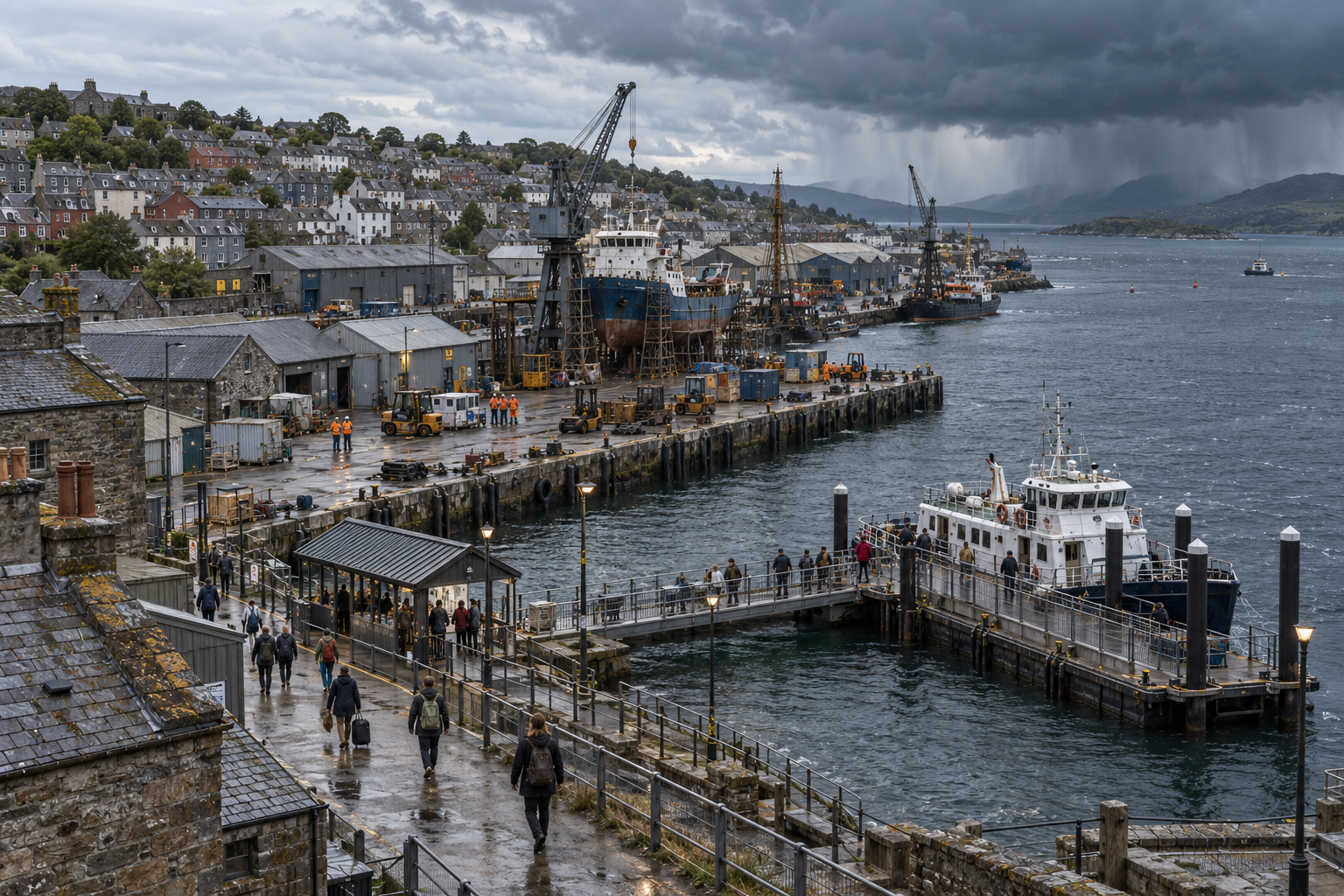
The waterfront changes across a working day. Fish handling, passenger boats, bulk deliveries and yard movements use separate allocations rather than one picturesque common quay. Salt, wet rope, furnace exhaust and food cooking above shop doors leave different districts recognisable before their signs can be read. Storm shutters and patched roofs give the city a practical, scarred appearance. Fresh paint is not necessarily evidence of recent repair.
Low industrial buildings spread along freight routes, while residential streets climb away from flood exposure. Some old harbour homes remain desirable because their construction and location work well; other low lodgings are cheap because the water remembers them. Evacuation planning distinguishes the two more reliably than an estate advertisement.
Twelve anchors for a walk through the city
Charter Quay receives licensed coastal traffic and official correspondence. Tide Street runs along the inhabited edge of the quay district, separated from active loading lanes. Loaders' Court opens behind it, providing labour dispatch, food stalls and covered waiting space. Receipt Lane climbs from Tide Street towards the civic terrace, where the Soundgate Assembly houses the Provincial Assembly's public entrance and committee rooms.
The Passage Fund Rooms stand beside Receipt Lane below the assembly complex. Applicants can obtain advice and lodge evidence there without being admitted to an imperial office by mistake. Upper Market occupies the higher residential approach. Sheltered Way continues along that terrace towards Return Garden, a public meeting place used for reading letters and ordinary recreation.
Cooling Road leads from the freight approaches to the outer industrial district. Glassyard Exchange handles finished and rejected lots, while the Vessel Test House occupies a controlled compound beyond its public frontage. A traveller can follow Charter Quay, Tide Street, Receipt Lane and Sheltered Way to Return Garden without entering a test enclosure. Reaching the industrial premises requires the appropriate entrance, not a shortcut marked by a hole in a fence.
A city with several public masters
The municipal council runs city services. The Provincial Assembly governs within the charter; the Crown's governor exercises specified imperial functions. Harbour officers allocate berths and enforce safety under local authority. Each office possesses useful powers, but none can convert the whole arrangement into its private trading concern. The public jurisdiction board at Soundgate identifies where common applications belong. It is frequently consulted after the applicant has already visited somewhere else.
Municipal courts hear local cases. Disputes involving the charter, foreign contracts or an imperial obligation follow their specified routes. Public advocates maintain sessions near the Passage Fund Rooms, partly because disappointed applicants are vulnerable to confident men with excellent stationery. A broker can arrange lawful assistance; demanding an advance for access to a nonexistent official is fraud.
Harbour police, rescue crews and industrial safety officers have different training and mandates. A rescue cannot await a customs argument, but rescuing a vessel does not exempt its owner from investigation afterwards. Boats impounded as evidence still need safe moorings and maintenance. Neglect during a lawful seizure has ruined more than one owner's eventual acquittal.
A working chain from furnace to customer
Tavren Technical College and the city's workshops train and employ glass finishers, inspectors, repairers, control specialists and handlers. The Glassyard Exchange classifies lots by specification and verified condition. A beautiful surface may conceal an internal flaw; successful testing requires appropriate instruments and people willing to reject expensive work.
Vessel makers draw on regional materials and imported specialist components. Their output serves water systems, clinics, industrial plants and carriers, with military purchases confined to agreed lots. The Vessel Test House provides controlled testing away from homes and ordinary shopping routes. Visitors can observe selected demonstrations behind protection; they cannot turn a safety boundary into a better place for a photograph.
Energy supply, cooling, clean process water and freight access determine capacity. Operators maintain reserves and negotiate interruptions with the utility service. A loss of supply at the wrong stage can destroy a batch, while a hurried restart creates further risk. Night shifts absorb the resulting demands. Families hear about a successful export contract when somebody stops coming home for supper.
The waiting city
Passage applicants, visiting crews, seasonal workers and provincial claimants sustain lodging houses around the civic approaches. Tenancies range from regulated long-term rooms to beds priced by the arrival of the next ship. Some proprietors store luggage without demanding a continuing room payment. Others discover a cleaning fee whenever a customer seems unable to dispute it.
Schools and clinics serve permanent residents and a changing temporary population. Harbour clinics treat injuries and exposure, while specialist referrals use larger medical services within the provincial network. The Salt Ward Care Association coordinates meals and visits for people living alone. Its volunteers cannot replace trained care, and their own households impose limits on what can be offered.
Rain closures affect outdoor labour first. A worker may be sent home for safety without qualifying for wages, then return to a leaking room. The labour dispatch office posts the actual cancellation terms alongside hiring notices. Reading them helps a person calculate the risk; it does not provide another job before the next rent date.
The sound of people remaining
Return Garden contains sheltered benches, a modest performance space and space for children away from traffic. Families read ship-borne letters there, while other visitors come simply to rest. The garden's name celebrates return without promising it. Some memorial gatherings honour a person still listed as missing, using words chosen carefully because legal certainty has not arrived with grief.
Market kitchens sell fish pies, preserved vegetables, hot grains and sharp sauces. Public halls host dance, small theatre companies and indoor ball games. Dockside satirists favour a recurrent customs clerk who invoices the tide for exceeding its declared volume. Real clerks laugh when off duty and sometimes complain that the impersonation misses the worst part of the work.
Competitive boat handling takes place only in designated sheltered reaches with controlled traffic. Spectators enjoy skill and minor embarrassment; rescue crews object to promoters treating dangerous weather as additional entertainment. Clubs lend practice hulls to young crews and repair them between events. On quiet evenings their sheds remain open long after the public landings have emptied.